Voice Search Optimization in 2025: How to Win the “Hey Siri” and “Hey Google” Game

In 2025, people are tapping into advances in voice recognition software to streamline their searches. Now that prospective customers are using more hands-free technology, they’re less likely to start searching for businesses from their keyboard. Using these voice search optimization tips from the experts at Saba SEO, a premier San Diego SEO company, can help you rise above the competition and drive more people to your business.
Embrace Using More Natural Language
In the past, users often left transition words such as “in” and “also” out of their typed searches. However, people tend to use more conversational language when they start a search with “Hey Siri.” Using more natural language ensures your marketing content aligns with what people are actively saying when they use voice searches.
Incorporate More Long-Tail Keywords
Long-tail keywords are naturally more conversational. You can use a keyword generator to identify conversational terms and phrases people may use when they’re searching for services or businesses that align with your company. You’ll also find focusing on specific phrases people might use as they search for a business leads more traffic to your company website.
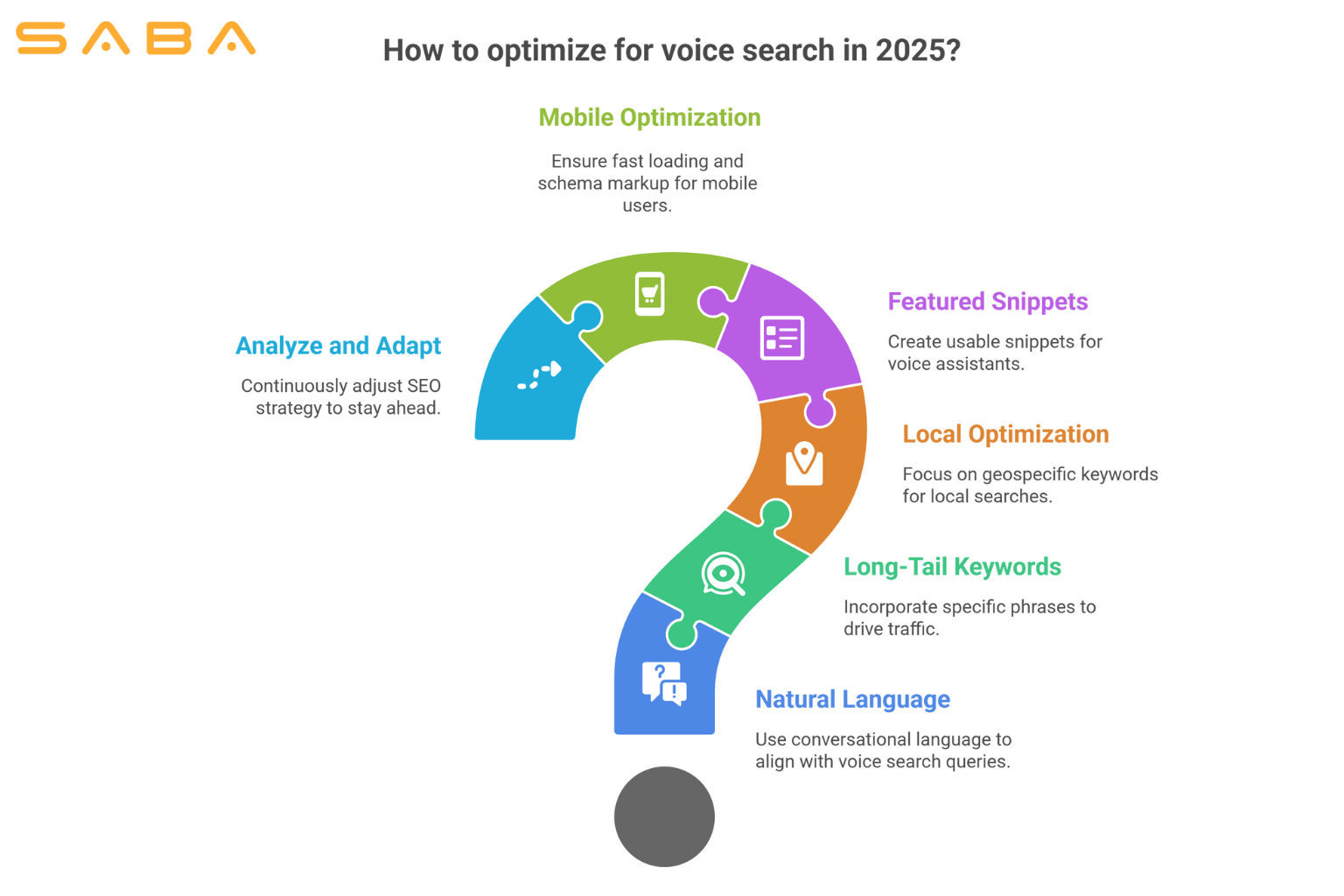
Optimize for Local Searches
When people are using voice search technology, they’re often searching for time-sensitive information. For instance, people might search for restaurants near them as they head into a new town on vacation. Or prospective patients might be looking for a medical clinic to visit while they’re already in their cars. Making sure to use geospecific keywords can get your business to the top of location-related voice searches.
Aim for Inclusion in Featured Snippets
Voice assistants often use the snippet box at the top of the search results to read out information to users. Make sure to create relevant and accurate content to use on your website that’s easily broken down into usable snippets or chunks of information. You can do this by using bullet points in your website content. Including FAQ sections and pages also ensures your website provides usable information that works well with voice assistant technology.
Focus on Mobile Optimization
Taking a mobile-first approach with your company’s website and marketing materials ensures smartphone and tablet users are guided to your business’s information. This might mean you need to update your website to have faster loading times. You can also use schema markup to help search engines understand the context of your content for better matching to queries.
Continue to Analyze and Adapt
As the year progresses, you’ll likely continue to see changes in how AI and voice searches impact the need for different types of optimization. With each new change you make to your company’s SEO and marketing plan, take time to carefully analyze the impact. Working with an experienced SEO company can help you stay a step ahead of the competition by adjusting quickly to new changes that impact voice search technology.
If you need help optimizing your business’s SEO strategy, reach out to the experienced professionals at Saba SEO, the leading experts on SEO in San Diego. We can help you with search engine optimization, online marketing, social media management, web design, and much more. Give us a call today to learn more about our industry-leading services.